


 Send Inquiry
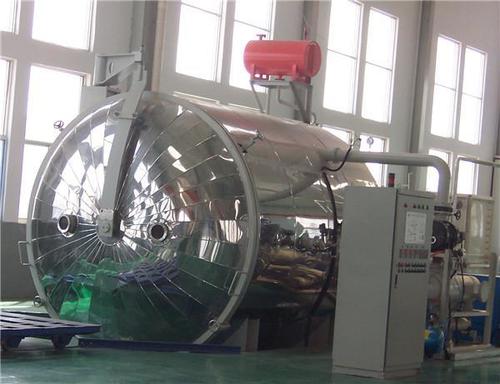
Dry-Type Transformer Vacuum Epoxy Resin Casting Plant
Price 10000 USD ($)/ Unit
Dry-Type Transformer Vacuum Epoxy Resin Casting Plant Specification
- Control Mode
- Automatic PLC Control
- Accuracy
- 1C
- Condition
- New
- Heating Method
- Electric Heating
- Heating Capacity
- 24 kW
- Power Source
- Electric
- Type
- Vacuum Epoxy Resin Casting Plant
- Model
- VRC-1600
- Internal Size
- 2800 x 1600 x 1800 mm
- External Size
- 3300 x 1800 x 2200 mm
- Volume
- 1600 Liters
- Air Flow
- Forced Circulation
- Temperature Range
- Room Temperature to 120C
- Material
- Stainless Steel & Carbon Steel
- Dimension (L*W*H)
- 3300 x 1800 x 2200 mm
- Power
- 24 kW
- Voltage
- 380V / 415V
- Surface Finish
- Powder Coated / Painted
- Epoxy Resin Tank Capacity
- 300 Liters
- Vacuum Degree
- 5 Pa
- Max Mould Size
- 1500 x 1200 x 1200 mm
- Max Casting Weight
- up to 4000 kg
- Transformer Class
- Class F / H / higher on request
- Noise Level
- 70 dB(A)
- Resin Mixing System
- Twin Shaft Disperser with Variable Speed
- Safety Features
- Over-temperature, Pressure Relief, Emergency Stop
- Degassing Time
- 10-30 minutes (adjustable)
- Display
- Touch Screen HMI
- Vacuum Pump Power
- 7.5 kW
- Cycle Time
- As per transformer size (typically 2-4 hours)
- Cooling System
- Air or Water Cooling as per requirement
Dry-Type Transformer Vacuum Epoxy Resin Casting Plant Trade Information
- Minimum Order Quantity
- 1 Unit
- Supply Ability
- 10 Units Per Day
- Delivery Time
- 60 Days
About Dry-Type Transformer Vacuum Epoxy Resin Casting Plant
Product description
The vacuum casting equipment is specially used in the production of dry type transformer, bushings, dry type reactor, high voltage switch insulation, and related electrical products. It mainly consists of material tank, mixing tank, measuring device, vacuum casting tank, vacuum pump system, heating system, control system, etc. It is suitable for degassing, mixing and casting high polymer materials such as bisphenol-A, outdoor type resin, polyurethane, etc. Dynamic mixing and static mixing for the resin material can be option as per customer need.
Advanced Vacuum Casting Technology
The VRC-1600 employs a sophisticated vacuum system achieving 5 Pa, ensuring air-free resin impregnation for transformers. This minimizes defects, improves electrical insulation properties, and extends transformer lifespan. The dual-shaft disperser optimizes resin mixing under vacuum, guaranteeing homogenous distribution and efficient degassing within 1030 minutes. Adaptive cycle times based on transformer size provide operational flexibility for diverse production demands.
Versatile Mould and Casting Capacity
With a maximum mould size of 1500 x 1200 x 1200 mm and casting weight capability up to 4000 kg, the plant accommodates a wide variety of transformer designs. Its 1600-liter working volume and 24 kW heating system (temperature range up to 120C) facilitate the manufacture of both standard and custom transformers. Powder coating and painted finishes protect the robust stainless and carbon steel frame for enhanced durability.
Intelligent Controls & Safe Operation
Automation via PLC and a user-friendly touch screen HMI allow for seamless process control and monitoring. The inclusion of safety mechanismssuch as over-temperature protection, pressure relief, and an emergency stopensures operator safety and compliance with industrial standards. Low noise levels (70 dB(A)) and forced air or water cooling enhance operational comfort in manufacturing environments.
FAQs of Dry-Type Transformer Vacuum Epoxy Resin Casting Plant:
Q: How does the vacuum system in the VRC-1600 improve transformer casting quality?
A: The plants vacuum system achieves a vacuum degree of 5 Pa, which removes air and moisture from the resin and winding during casting. This results in superior insulation properties, fewer air voids, and a significantly reduced risk of partial discharges, thus increasing transformer performance and lifespan.Q: What is the process for mixing and degassing epoxy resin in this casting plant?
A: Epoxy resin and hardener are combined in the 300-liter twin-shaft disperser. Under vacuum, variable speed mixing ensures uniform dispersion. The system then degasses the mixture for 1030 minutesremoving trapped gasesto produce a stable, bubble-free composition ideal for high-quality transformer casting.Q: When should air or water cooling be selected for the plant?
A: Selection between air or water cooling depends on production volume and ambient temperature. Air cooling suits standard, low to moderate output, whereas water cooling is recommended for high-output or high-ambient-temperature environments to ensure effective thermal management during curing.Q: Where is this vacuum epoxy resin casting plant primarily used?
A: The VRC-1600 is used in transformer manufacturing facilities, both by OEMs and component suppliers. Its robust design and customizable features make it suitable for industrial plants requiring reliable, high-capacity epoxy resin casting for dry-type transformers.Q: What are the benefits of using a twin shaft disperser with variable speed for resin mixing?
A: The twin shaft disperser allows highly efficient, adjustable-speed mixing of resins and hardeners, preventing settling and ensuring consistent distribution. This produces a homogenous, defect-free cast with enhanced mechanical and electrical properties, crucial for transformer reliability.Q: How does the automated PLC control and touch screen HMI enhance the user experience?
A: Automated PLC controls with a touch screen HMI simplify operation by allowing intuitive parameter setting, process monitoring, and fault diagnostics. This increases productivity, reduces manual error, and streamlines the entire casting process.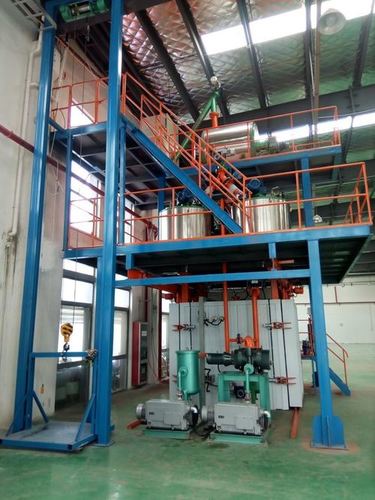

Price:
- 50
- 100
- 200
- 250
- 500
- 1000+

More Products in Transformer Vacuum Equipment Category
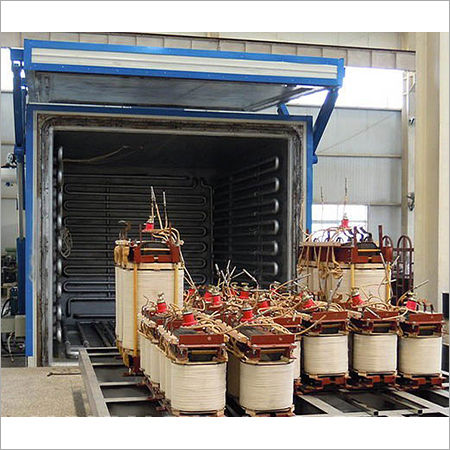
Variable-Pressure Vacuum Drying Equipment
Price 10000 USD ($) / Unit
Minimum Order Quantity : 1 Unit
Heating Capacity : 6 kW
Dimension (L*W*H) : 1200mm x 900mm x 1700mm
Volume : 432 Liters
Voltage : 380V / 50Hz
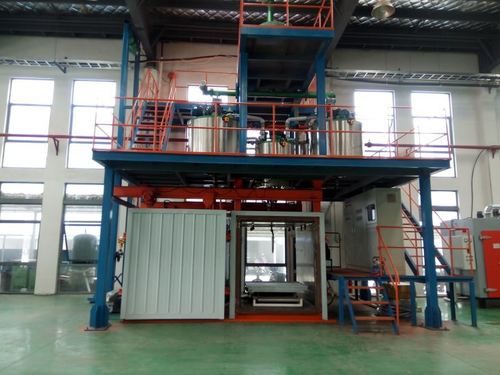
Epoxy Resin Vacuum Casting Forming Equipment For Dry Type Transformer And CT PT Production
Price 10000 USD ($) / Unit
Minimum Order Quantity : 1 Unit
Heating Capacity : 30 kW
Dimension (L*W*H) : 1800 x 1200 x 2100 mm
Volume : Approx. 2.5 m
Voltage : 380V / 50Hz
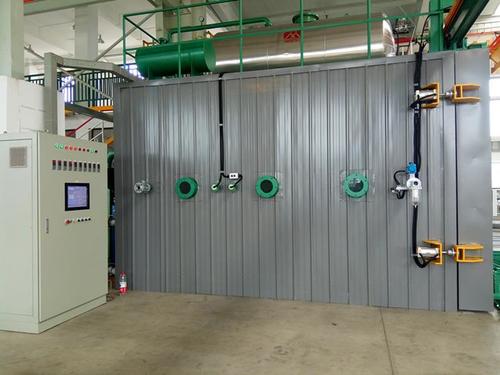
Power Transformer Vacuum Drying Furance Manufacturing
Price 10000 USD ($) / Unit
Minimum Order Quantity : 1 Unit
Heating Capacity : Up to 140 KW
Dimension (L*W*H) : 6000 mm x 3000 mm x 3500 mm
Volume : 37.5 m
Voltage : 380 V / 415 V
Vacuum Drying Oven Furnace Or Chamber For Transformer Reactor Etc Production
Price 10000 USD ($) / Unit
Minimum Order Quantity : 1 Unit
Heating Capacity : High (suitable for large transformer/reactor units)
Dimension (L*W*H) : As per client specification
Volume : Custom volume chamber
Voltage : 380V/415V


 Send Inquiry
Developed and Managed by Infocom Network Private Limited.
