


 Send Inquiry
Silicon steel Vertical-load Vacuum Annealing Furnace
Price 10000 USD ($)/ Unit
Silicon steel Vertical-load Vacuum Annealing Furnace Specification
- Accuracy
- 1C
- Power Source
- Electric
- Heating Method
- Resistance Heating
- Control Mode
- PID Automatic Control
- Condition
- New
- Heating Capacity
- Up to 8000 kg per batch
- Type
- Vertical-load Vacuum Annealing Furnace
- Model
- VLVA-2000
- Internal Size
- 2000 mm (Diameter) x 3500 mm (Height)
- External Size
- 2200 mm (Diameter) x 4000 mm (Height)
- Volume
- 11 m
- Air Flow
- Programmable, Multi-point Control
- Temperature Range
- Room temperature to 1200C
- Material
- Stainless Steel, High-Temperature Alloy
- Dimension (L*W*H)
- 3000 mm x 3000 mm x 5000 mm
- Power
- 120 kW
- Voltage
- 380 V / 415 V, 3 Phase
- Surface Finish
- Polished Industrial
- Controller Display
- Digital Touchscreen
- Color
- Silver / Customizable
- Safety Features
- Over-temperature Protection, Automatic Pressure Control
- Chamber Structure
- Double-layer Vacuum Tank
- Cooling Method
- Forced Air / Water Cooling
- Vacuum Degree
- 5 10 Pa
- Application
- Silicon Steel Coil Annealing
- Thermocouple Type
- K / S Type
- Loading Method
- Vertical Load, Crane-Compatible
- Insulation Material
- Ceramic Fiber and High Purity Alumina
- Noise Level
- 65 dB
- Cycle Time
- 10-14 hours (Adjustable)
Silicon steel Vertical-load Vacuum Annealing Furnace Trade Information
- Minimum Order Quantity
- 1 Unit
- Supply Ability
- 10 Units Per Day
- Delivery Time
- 60 Days
About Silicon steel Vertical-load Vacuum Annealing Furnace
Silicon steel Vertical-load Vacuum Annealing Furnace
Description
These furnaces are mainly for annealing different kind of wound CRGO cores for transformers, to release inner stress and decrease iron loss.
It is pre-vacuumed, nitrogen-cooling type.
It can release inner stress, raise magnetic performance of wound core and decrease iron loss.
Specifications
| Code | Rated power (kW) | Rated temperature () | Loading capacity (kg) |
| VS(W)A-75 | 75 | 950 | 700 |
| VS(W)A-90 | 90 | 950 | 1000 |
| VS(W)A-120 | 120 | 950 | 1200 |
| VS(W)A-150 | 150 | 950 | 1500 |
Exceptional Temperature Control and Insulation
The furnace utilizes precision K/S type thermocouples and PID automatic control to maintain a tight 1C accuracy. Advanced ceramic fiber alongside high-purity alumina insulation ensures optimal heat retention and minimal energy loss, making it adept at processing sensitive silicon steel coils. The multi-point air flow control allows tailored heat distribution for each application.
Advanced Safety and User Interface
Automatic over-temperature protection and digital touchscreen controls safeguard operators while streamlining operation. With automatic pressure control and clear digital feedback, the system enhances both usability and safety, suitable for industrial environments demanding high reliability and efficiency.
Customizable Design and Robust Construction
Built from stainless steel and high-temperature alloys, the VLVA-2000 combines durability with flexibility. The external and internal dimensions accommodate large coil batches, and customization options for color and surface finish ensure seamless integration into diverse facility aesthetics.
FAQs of Silicon steel Vertical-load Vacuum Annealing Furnace:
Q: How does the VLVA-2000 furnace ensure consistent annealing results for silicon steel coils?
A: The VLVA-2000 uses a double-layer vacuum tank to maintain vacuum levels as low as 5 10 Pa and applies resistance heating controlled by PID automatic algorithms. This setup, along with the multi-point programmable air flow and precise K/S type thermocouples, ensures temperature uniformity with an accuracy of 1C throughout the chamber, delivering reliable annealing.Q: What materials are used for insulation, and why are they effective?
A: Ceramic fiber and high-purity alumina are employed as insulation materials. These materials provide excellent thermal stability, reduce heat loss, and withstand temperatures up to 1200C, ensuring both energy efficiency and protection of the chamber walls during prolonged high-temperature operations.Q: When is the cycle time adjustable, and what is the typical range?
A: The cycle time for the annealing process is user-adjustable within a range of 10 to 14 hours, depending on coil batch size, required metallurgical properties, and specific process needs. Operators can fine-tune the cycle time via the digital touchscreen to optimize throughput or achieve specific material characteristics.Q: Where can the VLVA-2000 be installed, and what are the space requirements?
A: This furnace is suitable for installation in industrial environments, such as steel processing plants, and is particularly designed for crane compatibility to facilitate vertical loading. Its external dimensions are 3000 mm x 3000 mm x 5000 mm, so an appropriately ventilated and powered space is necessary.Q: What is the typical process for annealing with this furnace?
A: The process involves loading silicon steel coils vertically into the chamber, sealing the double-layer vacuum tank, and initiating the programmed heating cycle through the digital touchscreen. The furnace then performs vacuuming, heating to the set temperature, controlled soaking, and cooling phases, all under strict PID regulation.Q: How does the furnace enhance operator safety and process reliability?
A: Safety is maximized with features like over-temperature protection, automatic pressure control, and a noise level kept to 65 dB. Additionally, the digital touchscreen provides real-time monitoring and alerts, while robust stainless steel construction and advanced insulation materials offer operational and environmental protection.Q: What are the benefits of using the VLVA-2000 for silicon steel coil processing?
A: Users benefit from rapid, uniform annealing cycles, energy efficiency, and minimized oxidation or contamination thanks to high-purity vacuum atmospheres. Programmable controls and robust construction reduce maintenance needs, while the large batch capacity and custom options maximize productivity for manufacturers, distributors, and traders alike.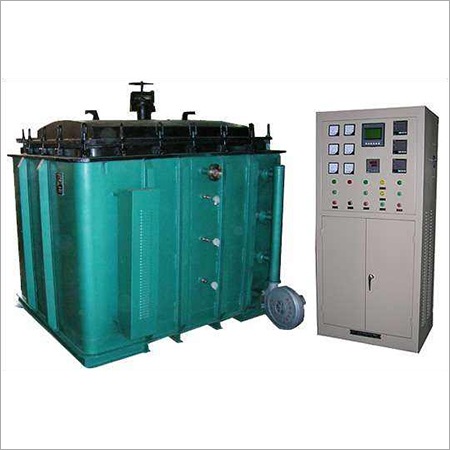

Price:
- 50
- 100
- 200
- 250
- 500
- 1000+

More Products in Transformer Vacuum Equipment Category
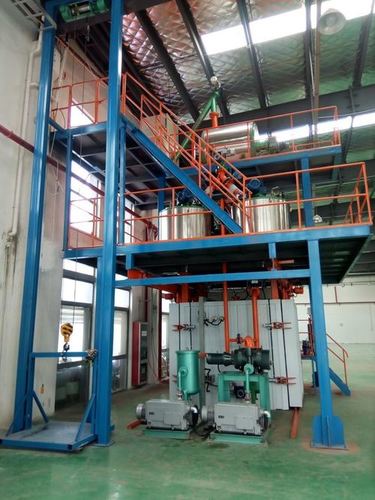
Dry-Type Transformer Vacuum Epoxy Resin Casting Plant
Price 10000 USD ($) / Unit
Minimum Order Quantity : 1 Unit
Control Mode : PLC Automatic Control & Manual Override
Surface Finish : Other , Polished Industrial Finish
Type : Other Ovens, Vacuum Chamber with Heating System
Condition : New

Transformer vacuum impregnation equipment
Price 10000 USD ($) / Unit
Minimum Order Quantity : 1 Unit
Control Mode : PLC Automatic Control
Surface Finish : Powder Coated
Type : Other Ovens, Vacuum Impregnation Equipment
Condition : New
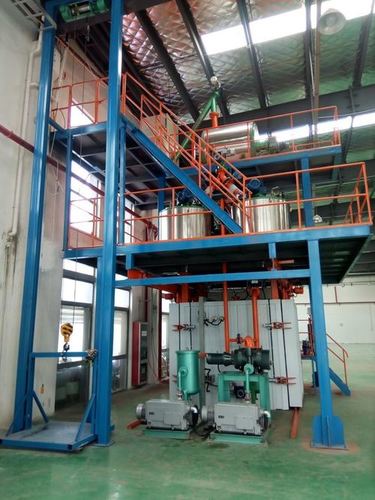
Dry-Type Transformer Vacuum Epoxy Resin Casting Plant
Price 10000 USD ($) / Unit
Minimum Order Quantity : 1 Unit
Control Mode : Automatic PLC Control
Surface Finish : Other , Powder Coated / Painted
Type : Other Ovens, Vacuum Epoxy Resin Casting Plant
Condition : New
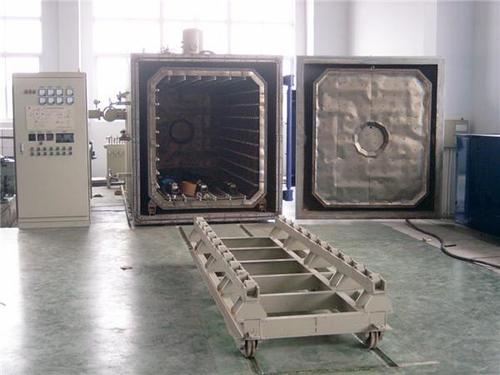
Vacuum Annealing Furnace
Price 10000 USD ($) / Unit
Minimum Order Quantity : 1 Unit
Control Mode : Automatic Digital Control
Surface Finish : Other , Powder Coated / Painted
Type : Other Ovens, Vacuum Furnace
Condition : New


 Send Inquiry
Developed and Managed by Infocom Network Private Limited.
