


 Send Inquiry
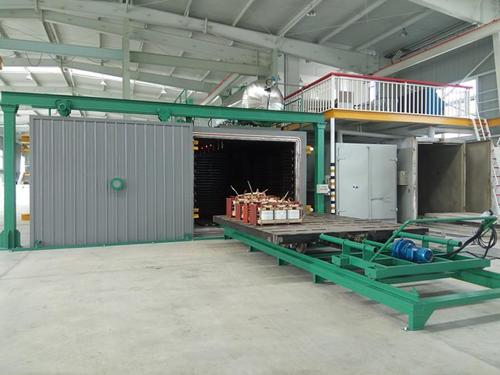
Vacuum Epoxy Resin Casting Machine Chamber For Dry Type Transformer Reactor Making
Price 10000 USD ($)/ Unit
Vacuum Epoxy Resin Casting Machine Chamber For Dry Type Transformer Reactor Making Specification
- Heating Capacity
- 18 kW
- Heating Method
- Electric Heating Jacket
- Power Source
- Electric
- Condition
- New
- Control Mode
- PLC Automatic Control
- Accuracy
- 1C
- Type
- Vacuum Epoxy Resin Casting Machine Chamber
- Model
- VRCC-1400
- Internal Size
- 1400 mm x 1200 mm x 1800 mm
- External Size
- 1800 mm x 1600 mm x 2100 mm
- Volume
- 2.5 m
- Air Flow
- Vacuum, Oil-Free
- Temperature Range
- Room Temp. ~ 120C
- Material
- High Strength Carbon Steel / Stainless Steel
- Dimension (L*W*H)
- 1800 mm x 1600 mm x 2100 mm
- Power
- 22 kW
- Voltage
- 380V / 415V / 440V, 3 Phase
- Surface Finish
- Painted / Polished
- Environmental Controls
- Anti-fume, Dust Resistance
- Vacuum Pump Power
- 7.5 kW
- Resin Mixing Capacity
- 100 kg 120 kg per Batch
- Mixing System
- Double-planetary or Anchor Type
- PLC Interface
- Siemens / Mitsubishi
- View Window
- Tempered Glass Inspection Port
- Chamber Door
- Hydraulic Lifting or Hinged
- Vacuum Degree
- 10 Pa
- Application
- Dry Type Transformer and Reactor Resin Encapsulation
- Safety System
- Overheat, Emergency Stop, Pressure Relief
- Color
- Industrial Grey / Custom
- Epoxy Pouring Method
- Automatic Vacuum Pouring
Vacuum Epoxy Resin Casting Machine Chamber For Dry Type Transformer Reactor Making Trade Information
- Minimum Order Quantity
- 1 Unit
- Supply Ability
- 10 Units Per Day
- Delivery Time
- 60 Days
About Vacuum Epoxy Resin Casting Machine Chamber For Dry Type Transformer Reactor Making
EPOXY RESIN VACUUM CASTING EQUIPMENT
Description
The vacuum casting equipment is specially used in the production of dry type transformer, bushings, dry type reactor, high voltage switch insulation, and related electrical products. It mainly consists of material tank, mixing tank, measuring device, vacuum casting tank, vacuum pump system, heating system, control system, etc. It is suitable for degassing, mixing and casting high polymer materials such as bisphenol-A, outdoor type resin, polyurethane, etc. Dynamic mixing and static mixing for the resin material can be option as per customer need.
Characteristics
- Perfect vacuum pump system ensure high production quality
- Reliable material measuring system for precision feeding
- Advanced heating technology for material and casting
- Automatic PLC control with touch screen operation
- Convenient operating with complete parameter indicating, recording and alarm
Cutting-Edge Vacuum Resin Casting Efficiency
This chamber covers the complete encapsulation needs for dry type transformer reactors. Automated vacuum pouring allows for consistent, bubble-free epoxy application, while PLC control ensures precise temperature and mixing accuracy. Its robust build provides durability and operational safety, making it ideal for high-output industrial environments.
Versatile Control and Safety Features
Equipped with Siemens or Mitsubishi PLC interfaces, operators can precisely manage resin mixing, temperature (1C), and safety features such as overheat protection, emergency stop, and pressure relief. The chambers electric heating jacket and vacuum pump collaborate for uniform resin curing, backed by real-time monitoring through tempered glass inspection ports.
FAQs of Vacuum Epoxy Resin Casting Machine Chamber For Dry Type Transformer Reactor Making:
Q: How does the vacuum degree of 10 Pa improve the epoxy resin casting process?
A: Achieving a vacuum degree of 10 Pa helps eliminate air bubbles and moisture within the chamber, resulting in high-quality, void-free encapsulation of dry type transformers and reactors. This ensures greater durability and superior electrical insulation.Q: What mixing systems are available in the VRCC-1400 chamber, and when should they be chosen?
A: The VRCC-1400 comes with double-planetary or anchor-type mixing options. Double-planetary mixers are optimal for homogeneous blending of high-viscosity resins, while anchor-type mixing is suitable for standard viscosity applications. Selection depends on the resin type and casting requirements.Q: Where can a distributor or manufacturer use this vacuum resin casting machine chamber?
A: The chamber is suitable for facilities engaged in dry type transformer and reactor manufacturing, particularly in industrial environments requiring precise resin encapsulation and safety compliance. It is widely used by exporters, suppliers, and traders across India.Q: How does the automatic vacuum pouring method benefit the resin encapsulation process?
A: Automatic vacuum pouring allows for precise, consistent application of epoxy resin under controlled vacuum conditions. This minimizes manual error, improves productivity, and ensures each casting meets stringent quality standards.Q: What process and safety controls are integrated into this machine?
A: The chamber features PLC automatic control for precise mixing and temperature regulation, along with safety systems such as overheat protection, emergency stop, and pressure relief valves. These controls ensure safe operation even during intensive production cycles.Q: How is temperature managed and how does this impact usage?
A: Temperature is regulated with an 18 kW electric heating jacket and monitored via PLC, maintaining an accuracy of 1C across a range from room temperature up to 120C. This guarantees optimal curing conditions and uniform resin quality in every batch.Q: What are the key benefits of using the VRCC-1400 for epoxy encapsulation?
A: The VRCC-1400 offers high mixing capacity, efficient vacuum operation, robust environmental controls, and customizable safety features, delivering improved product reliability and greater operational efficiency for makers of dry type transformers and reactors.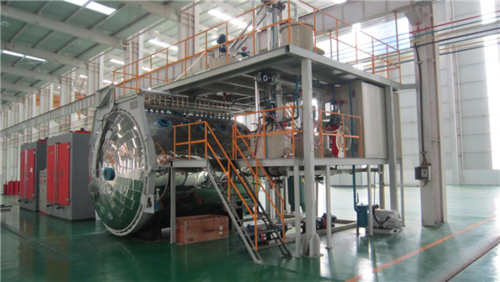

Price:
- 50
- 100
- 200
- 250
- 500
- 1000+

More Products in Transformer Vacuum Equipment Category
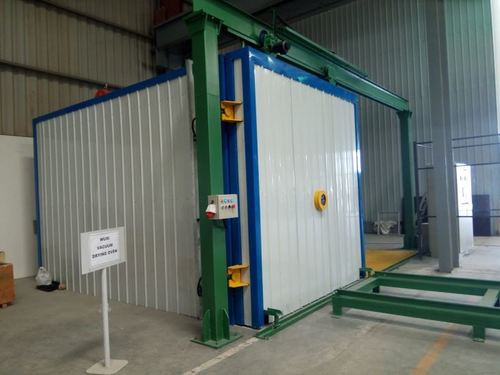
Industrial Vacuum Drying Oven Heating By Gas Burner For Transformer Drying
Price 10000 USD ($) / Unit
Minimum Order Quantity : 1 Unit
Heating Method : Gas Burner Heating
Power : Depends on configuration
Dimension (L*W*H) : As per client specifications
Heating Capacity : Up to 500 kW (configurable)
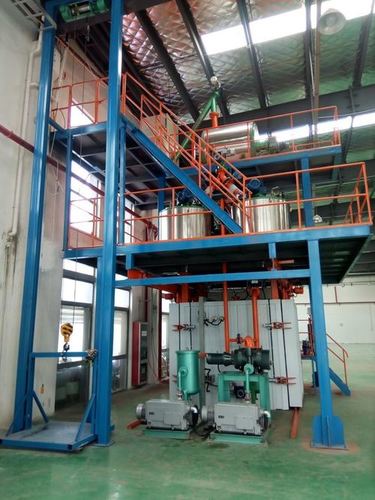
Dry-Type Transformer Vacuum Epoxy Resin Casting Plant
Price 10000 USD ($) / Unit
Minimum Order Quantity : 1 Unit
Heating Method : Electric Heating
Power : 24 kW
Dimension (L*W*H) : 3300 x 1800 x 2200 mm
Heating Capacity : 24 kW
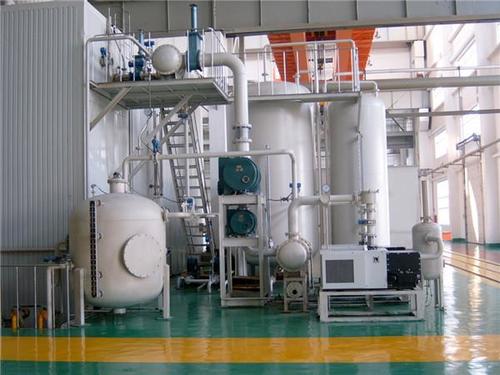
Kerosene Vapor Phase Drying Equipment (VPD) For Big Power Transformer
Price 10000 USD ($) / Unit
Minimum Order Quantity : 1 Unit
Heating Method : Kerosene Vapor Phase Heating
Power : Approx. 150 kW (Control Panel); Main heating 2000 kW
Dimension (L*W*H) : Customized as per project
Heating Capacity : Up to 2000 kW
Power Transformer Vacuum Drying Furance Manufacturing
Price 10000 USD ($) / Unit
Minimum Order Quantity : 1 Unit
Heating Method : Electric Heating (Resistive or IR options)
Power : 500 kW to 2500 kW
Dimension (L*W*H) : Customized
Heating Capacity : 500 kW to 2500 kW (as per model)


 Send Inquiry
Developed and Managed by Infocom Network Private Limited.
