


 Send Inquiry
Kerosene Vapor Phase Drying Equipment (VPD) For Big Power Transformer
Price 10000 USD ($)/ Unit
Kerosene Vapor Phase Drying Equipment (VPD) For Big Power Transformer Specification
- Accuracy
- 1C
- Condition
- New
- Heating Capacity
- Up to 3000 kW
- Control Mode
- PLC Automatic / Manual
- Power Source
- Electric / Diesel
- Heating Method
- Kerosene Vapor Phase
- Type
- Kerosene Vapor Phase Drying Equipment
- Model
- VPD-3000T
- Internal Size
- Designed as per transformer dimensions
- External Size
- Customizable for large transformer applications
- Volume
- 30000 L to 70000 L
- Air Flow
- High-Capacity Circulating Blower
- Temperature Range
- 40C - 150C
- Material
- Stainless Steel / Carbon Steel
- Dimension (L*W*H)
- As per project requirement
- Power
- 300 kW - 3000 kW (configurable)
- Voltage
- 380V/415V, 3-Phase
- Surface Finish
- Corrosion Resistant Industrial Paint
- Operation Mode
- Fully Automatic / Semi-Automatic
- Safety Protection
- Over-temperature Protection, Emergency Stop, Vapor Leakage Detection
- Monitoring System
- Digital Temperature & Vacuum Sensors, Central Control Panel
- Environment Requirement
- Indoor, Ventilated Area
- Application
- Big Power Transformer Core & Coil Drying
- Drying Cycle Time
- 6-48 Hours (Depending on Transformer Size and Moisture)
- Vapor Distribution
- Uniform Distribution with Optimized Kerosene Flow Design
- Vacuum System
- High-Efficiency Multi-Stage Vacuum Pump
Kerosene Vapor Phase Drying Equipment (VPD) For Big Power Transformer Trade Information
- Minimum Order Quantity
- 1 Unit
- Supply Ability
- 10 Units Per Day
- Delivery Time
- 60 Days
About Kerosene Vapor Phase Drying Equipment (VPD) For Big Power Transformer
Description
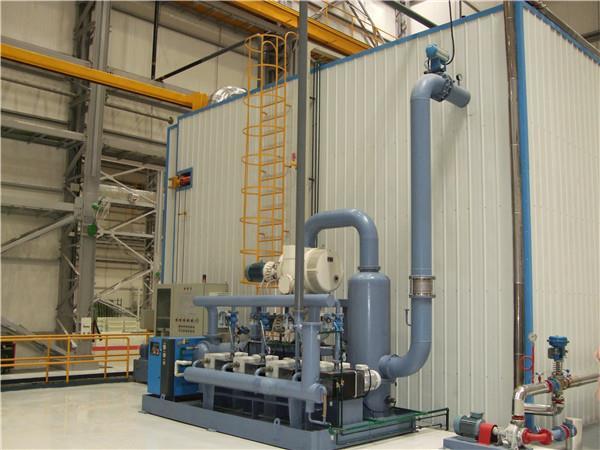
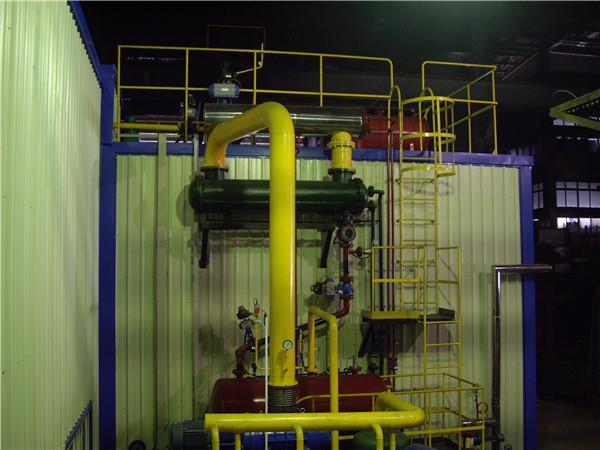
Kerosene vapor phase drying equipment (KVPD) is mainly used for drying bodies for 110KV and more super high voltage transformer and reactors, etc. The basic principle is that: liquid kerosene is evaporated by heating. High temperature kerosene vapor go into the vacuum tank and attach the workpiece, it will condense and release latent heat of condensation (about 306.6KJ/KG), and the workpiece will be heated. Condensed kerosene will be collected and transmitted to the evaporator to be heat again. In this way, workpiece will be heated continuously to evaporate the water. Water vapor shall be exhausted under vacuum condition. In the end workpiece shall be complete dried.
Advanced Vapor Phase Drying Technology
The VPD-3000T uses kerosene vapor phase drying, providing consistent and thorough moisture extraction from transformer cores and coils. Its optimized kerosene flow design ensures uniform vapor distribution, protecting winding insulation quality and extending transformer life.
Comprehensive Safety & Monitoring Features
Safety comes first with this equipment. Over-temperature protection, emergency stop function, and vapor leakage detection minimize operational risks. Integrated digital temperature and vacuum sensors allow for real-time monitoring, while the central control panel streamlines operation and oversight.
Tailored for Industrial Transformer Applications
Custom-designed for large transformers, the VPD-3000Ts dimensions, heating capacity (up to 3000 kW), and control system configurations are adaptable to meet project requirements. Its corrosion-resistant paint and robust materials ensure longevity, even in demanding industrial settings.
FAQs of Kerosene Vapor Phase Drying Equipment (VPD) For Big Power Transformer:
Q: How does the kerosene vapor phase drying process work for big power transformers?
A: The process involves heating kerosene to generate vapor, which is then uniformly circulated over the transformer coils and core. This vapor effectively absorbs and carries away moisture during multiple drying cycles, enhancing insulation quality and operational reliability.Q: What benefits does the VPD-3000T equipment offer for transformer maintenance?
A: The VPD-3000T ensures thorough drying, which reduces transformer failure risk, prolongs service life, and maintains optimal electrical performance. Its precise control and safety features also minimize manual intervention and enhance operational security.Q: When should I use kerosene vapor phase drying for transformers?
A: Kerosene vapor phase drying is recommended for newly manufactured, refurbished, or moisture-contaminated large power transformers, especially where effective core and coil drying is essential for safe, long-term operation.Q: Where is the VPD-3000T equipment best installed for efficient operation?
A: It is ideally set up in indoor, ventilated environments to prevent vapor accumulation and ensure proper airflow for the drying process. Custom dimensions allow it to accommodate a wide range of transformer sizes and facility layouts.Q: What steps are involved in operating the VPD-3000T drying equipment?
A: Operation includes loading the transformer, setting drying parameters via the central control panel, initiating kerosene heating, monitoring temperature and vacuum levels, and completing the cycle according to the specified drying time. Safety systems and sensors monitor the entire process.Q: How does the monitoring system enhance usage and safety?
A: Digital temperature and vacuum sensors provide real-time feedback, allowing operators to adjust settings promptly. Over-temperature protection and vapor leakage detection systems actively prevent unsafe conditions during the drying cycle.Q: What customization options are available for large power transformer applications?
A: The equipments heating capacity, dimensions, control mode, and external/internal sizes can all be tailored to fit specific transformer models and site requirements, ensuring compatibility and efficiency in industrial settings.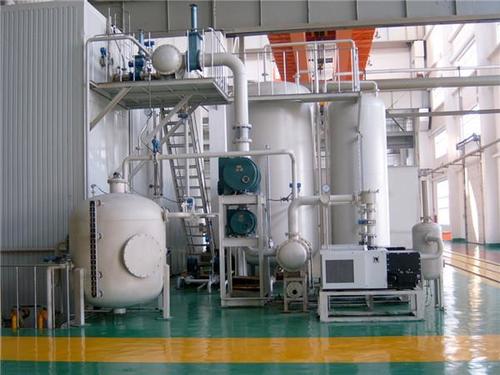

Price:
- 50
- 100
- 200
- 250
- 500
- 1000+

More Products in Transformer Vacuum Equipment Category

Transformer vacuum impregnation equipment
Price 10000 USD ($) / Unit
Minimum Order Quantity : 1 Unit
Accuracy : 1C
Type : Other Ovens, Vacuum Impregnation Equipment
Condition : New
External Size : 2200 mm x 1400 mm x 2000 mm
Kerosene Vapor Phase Drying Equipment (VPD) For Big Power Transformer
Price 10000 USD ($) / Unit
Minimum Order Quantity : 1 Unit
Accuracy : 1C
Type : Other Ovens, Kerosene Vapor Phase Drying Equipment (VPD)
Condition : New
External Size : Customized as per transformer size requirements
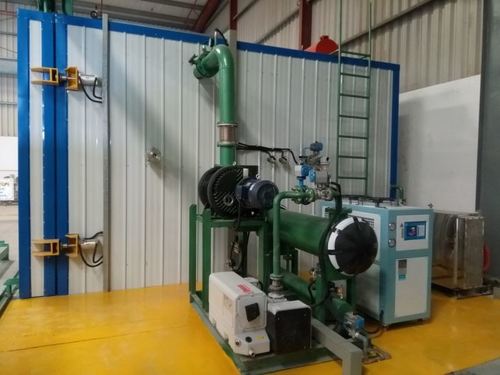
Vacuum Drying Oven Or Chamber For Power Transformer
Price 10000 USD ($) / Unit
Minimum Order Quantity : 1 Unit
Accuracy : 1C
Type : Other Ovens, Vacuum Drying Oven / Chamber
Condition : New
External Size : 1200 mm x 1000 mm x 1600 mm
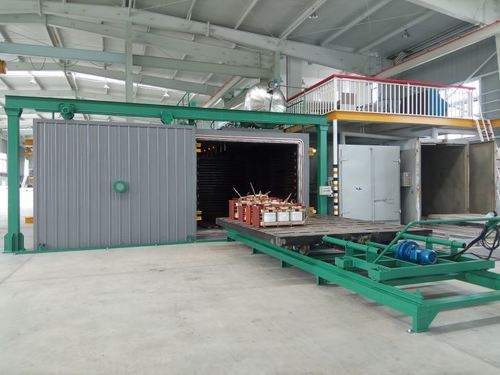
HS-35A Vacuum Drying Oven Euipment With Vacuum Variable Pressure Changing Procedure
Price 10000 USD ($) / Unit
Minimum Order Quantity : 1 Unit
Accuracy : 1C
Type : Other Ovens, Vacuum Drying Oven
Condition : New
External Size : 600 x 590 x 1460 mm


 Send Inquiry
Developed and Managed by Infocom Network Private Limited.
